


Prismatic vs Galilean Loupes: ILLUCO Technical Evaluation
Discover the key differences between prismatic and Galilean loupes, from magnification and image clarity to weight and cost, to choose the right option.
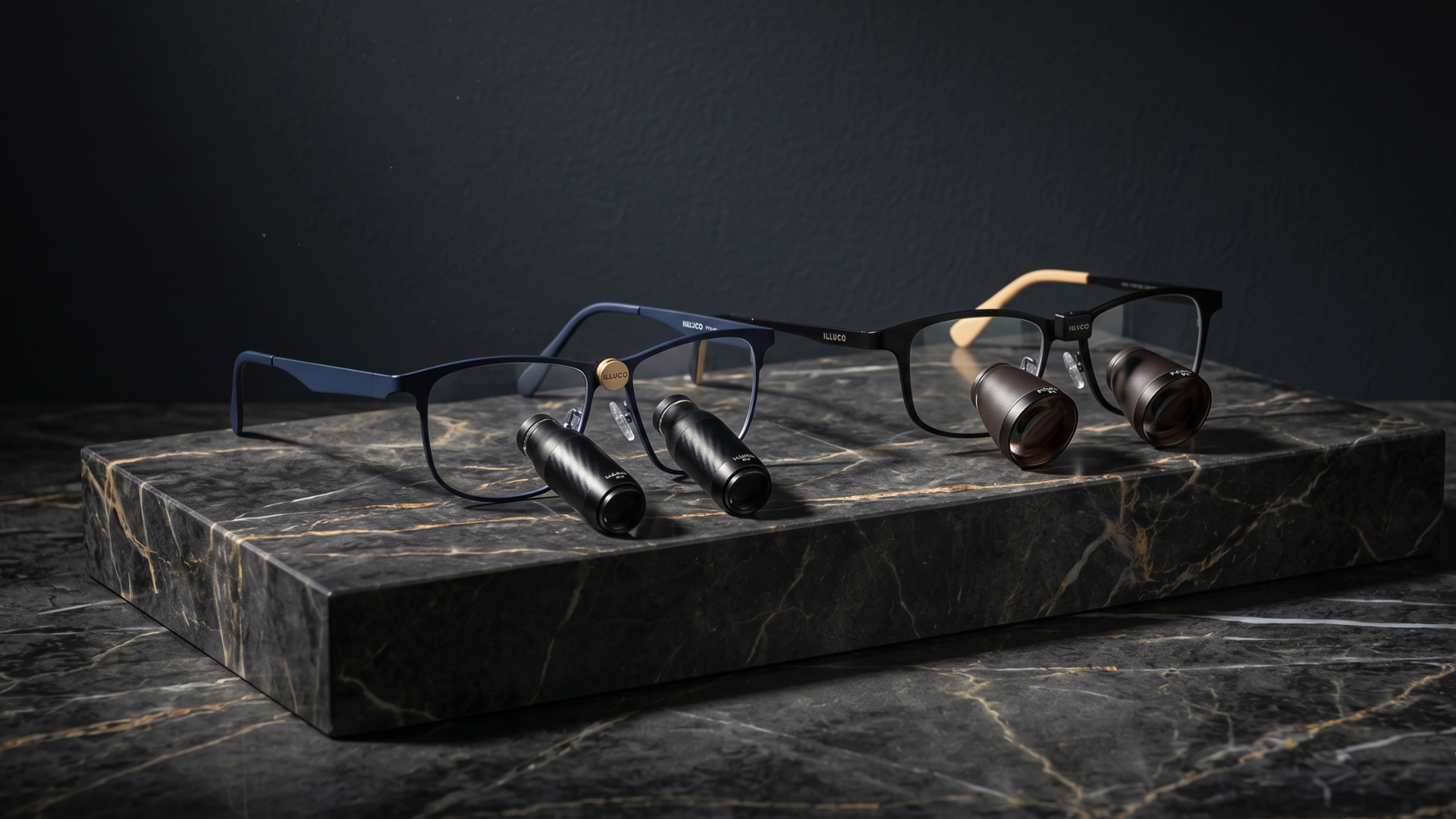
Not all loupes are created equal. When it comes to choosing between prismatic and galilean optics, understanding how each type works and where it excels makes all the difference.
How They Work
Galilean loupes take a simpler approach, using a series of convex lenses to magnify the image. Prismatic loupes, also called Keplerian loupes, go a step further by combining lenses with prisms to bend and magnify light, resulting in sharper, more detailed views.
The Case for Prismatic Loupes
If your work demands precision, prismatic loupes are hard to beat. Their magnification range typically 3.5x to 8.0x sits well above what Galilean loupes can offer, and the prism-based optics produce noticeably crisper images. For intricate, detail-heavy procedures, that combination is invaluable.
The trade-off? Prismatic loupes are heavier due to their more complex optical system, and that added weight can become noticeable during long procedures. They also carry a higher price tag and tend to have a narrower field of view and shallower depth of field, meaning more head movement and focus adjustments throughout your work.
The Case for Galilean Loupes
Galilean loupes win on practicality. Their simpler lens system makes them significantly lighter, reducing strain during extended use a genuine advantage for professionals spending hours at a time looking through their loupes. They're also the more affordable option, making them a natural starting point for beginners or anyone who doesn't need extreme magnification.
At the same magnification level, Galilean loupes actually outperform prismatic ones in two key areas: field of view and depth of field. You'll see more of the working area without repositioning your head, and you can maintain focus across a wider range of distances with fewer adjustments. The only optical downside is that images can show slight distortion or softness at the edges compared to prismatic loupes.
Side by Side at the Same Magnification
Even when both loupe types are set to identical magnification, the experience differs meaningfully:
- Field of view: Galilean loupes show more of the working area; prismatic loupes have a narrower view
- Depth of field: Galilean loupes hold focus over a larger range of distances; prismatic loupes require more frequent adjustments
- Image sharpness: Prismatic loupes deliver a crisper, more detailed image, particularly at higher magnifications
Making Your Choice
Your ideal loupe comes down to what you prioritise. Need high magnification and razor-sharp image quality? Prismatic loupes are the better fit. Prefer something lighter, more budget-friendly, and easier to work with over longer sessions? Galilean loupes are worth serious consideration. Illuco carries both options, so whatever your requirements, there's a loupe suited to your needs.


